
Residential
View all Residential
Commercial
View all Commercial

Get Lloyd's Master Guarantee
Work with Lloyd and get quality, safety, and reliable service every time. Backed by our $20,000 Master Electrician Guarantee.
Enquire now
Fibre helps your internet run at top speeds. The advantage of using fibre is obvious, but the installation path is not so clear.
If you've decided fibre is the next step for you, use our guide to help you through the installation process.
First, make sure you have consent to install fibre. If you own your home and it stands on its own, you have no need to worry. However, if you live on a shared or rented property, you may need to discuss fibre installation with a landlord or neighbors before you start.
Contact your local fibre company to learn whether or not you need consent. New Zealand internet provider companies will usually send out a qualified contractor to do this work for you, and you may be able to negotiate for this installation to be performed free of charge.
Reach an agreement with your local fibre technician. If it is determined that you have consent for installation, you will then set up an appointment with your local fibre technician, who will visit your home to discuss the work that will be done and walk you through the steps of the installation process.
Once the process is discussed and any questions you may have are answered, you will be asked to sign an agreement listing all the necessary work for the process.
Next up: the build phase. During this phase, the installation company will connect the fibre from the road to your home. You may not necessarily need to be home while this goes on, but it will be helpful if you are available for phone calls, just in case you need to be contacted during the process.
The length of the build phase will vary based on specific work necessary for your home, which will have been discussed with you during your first meeting with the technician.
Connection. You will need to be home for up to four hours for this step. This is when the fibre will be connected from outside to inside your home.
The technician will wire the fibre from the external termination point (ETP) outside the house to the optical network terminal (ONT) inside the house.
This equipment will have been placed in areas that you have approved, and the technician will test the connection before departing.
Costs and cautions. If you have alarm systems in your home, you will want to test them to make sure they still function after fibre installation.
Typically, the cost of standard installation is covered by the company. An installation is standard when it is less than 200 metres from the street to your ETP.
Non-standard installation may include additional costs, such as the distance from the street to ETP exceeding 200 metres, or if the ETP or ONT needs to be placed in unusual locations.
Additional costs may include moving the wiring location, ETP or ONT later on.
If any aspects of the fibre installation process at your home are unusual or require extra resources, your technician will notify you of the situations and their additional costs.
Once your installation is finished, you may enjoy your high connection speeds! If you have any further questions – our friendly team can help you work out any wiring requirements. Contact us today!
Rule #1
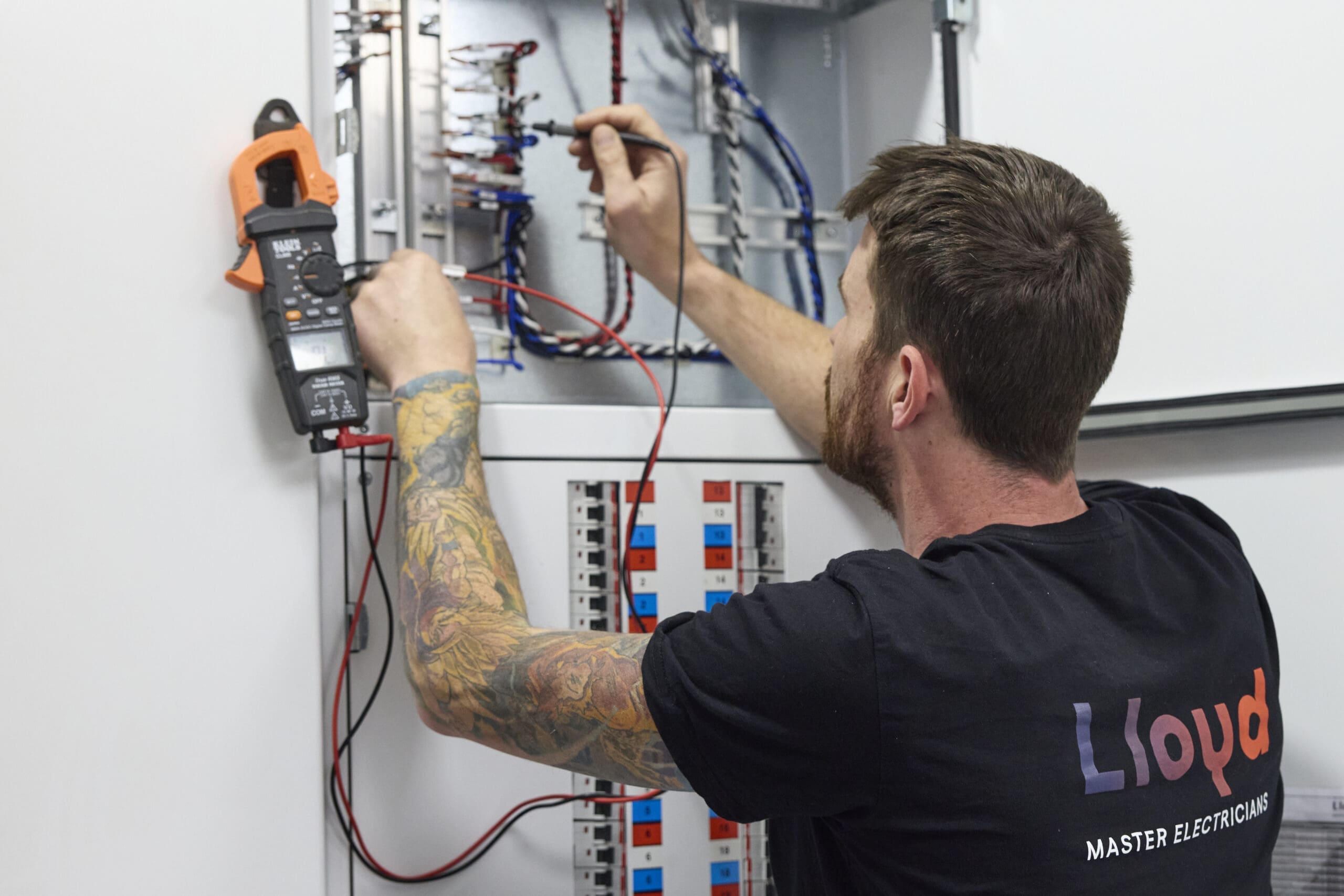
Before you repair or service electrical equipment be sure you have disconnected it from it's power source.
Rule #2
Don't use tools that have handles that are not insulated. Non-insulated handles can pass electricity from the tool through your body causing injury or death.
Rule #3
When handling electrical devices assume they are live and energised.
Rule #4
Treat all energised electrical circuits as if your life depended upon not coming into contact with them.
Rule #5
If any part of your body or clothing is wet, do not touch any electrical device or equipment that is plugged in.
Rule #6
If at all possible try and perform work on electrical equipment with one hand. Keep your free hand in your pocket and away from anything that might conduct electricity.
Rule #7
When working with electrical devices unplug them or shut off the power if any chemical or water comes into contact with it.
Rule #8
Never touch an electrical device with anything metallic such as pens or tape measures. Be sure and remove all jewelry from your person. These types of material may conduct electricity.
Rule #9
If someone in your immediate area comes into contact with live electricity, you cannot help them if you touch either the person or the source of the electricity. Before you do anything else disconnect the power source or trip the circuit breaker.
Rule #10
Rooms that are extremely cold create conditions of condensation and the moisture from this is conducive to electricity.
[/vc_column_text][vc_column_text]Other things to be cautious with: not touching equipment others are working on, or when standing on a wet floor; if a device tingles there may be a short; enclose electrical contacts to avoid accidents; drain all capacitors; don't handle defective circuits; disconnect high voltage sources; de-energise experimental circuits; don't wear loose clothing; keep flammable liquids away from electrical devices; know your wiring scheme.
Lloyd Electrical is a proven and reputable Auckland electrical service company. Our advice is to always follow these rules when you must handle electrical equipment. For those circumstances that fall beyond you experience and skill level of working with electrical service and you require the services of a trustworthy professional be sure and contact us.
Let's take a look at a couple of electrical problems that are common, at one time or another, to most Auckland residents. That is, resetting an electrical breaker that has tripped, and the steps you need to perform to remove a circuit breaker from your electrical panel. The first, while certainly requiring the following of established safety procedures, is something most of us have done, but the second problem requires some serious consideration as to whether to do it yourself or to call a Auckland electrician to do it. Let's examine them in order.
A breaker is simply an electrical switch designed to disengage an electrical circuit in order to deal with wiring that is overloaded or circuits that have shorted. They are found in your breaker box, which is typically located in laundry rooms or utility closets, and in attics if your home has one. Breakers are grouped in rows with plastic switches for flipping, on or off, exposed above the panel. It's important to keep in mind that the reason a breaker trips, aside from a power outage, can be an indication that there are appliances that are no longer functioning. Here's how to reset a tripped breaker.
This leads us to problem number two: whether or not to attempt to remove a circuit breaker yourself. If you are unsure of your skills working with electrical problems proceed no further. You need to call a professional electrical services company. If, however, you have experience working with electrical wiring be sure to follow these recommended steps so as to ensure your safety.
You're going to need some basic tools and you can be confident as to your safety if you follow long established safety rules for handling electrical wiring.
Now that you know how to remove and replace a circuit breaker bear in mind that Lloyd Electrical has been providing professional residential and commercial electrical services for the North Shore area for many years. If you have even the slightest doubt about your abilities to tackle electrical problems please choose the safer option and contact Lloyd electrical today.